

Ketten kombinieren und layern
Lass zwischen den Längen einen klaren Abstand, damit Ketten nicht aufeinander liegen. Variiere die Breiten. Bleib bei einem Anhänger. Zwei Lagen sind sicher, drei sind das Limit. Unsere Ketten sind verstellbar, das erledigt das Meiste.
Fang bei den Längen an, die du hast
Ketten kombinieren ist zuerst eine Frage der Länge und erst danach eine Frage des Stils. Landen zwei Ketten innerhalb eines Zentimeters beieinander, verheddern sie sich, reiben und wirken wie eine einzige dicke, unordentliche Kette.
Die Längen in unserem Sortiment sind je Familie festgelegt, und jede ist verstellbar.
| Familie | Länge | Verstellbar auf | Sitzt |
|---|---|---|---|
| Feine Ketten, zum Beispiel Luna Emerald und Vienna Clover | 40 cm | Plus 9 cm, also bis 49 cm | Kurz getragen am Halsansatz |
| Anhängerketten, zum Beispiel North und Cannes | 49 cm | Plus 4 cm, also bis 53 cm | Auf oder knapp unter dem Schlüsselbein |
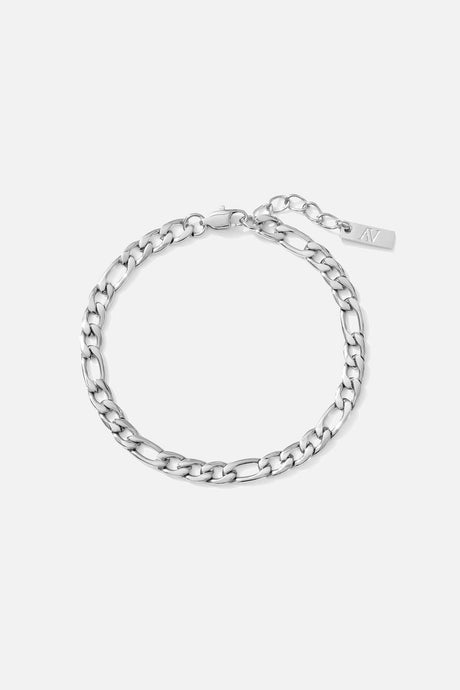
| Panzer-, Figaro-, Kordel-, Ähren-, Schlangen- und Vipera-Ketten | 48 cm | Plus 3 cm, also bis 51 cm | Auf dem Schlüsselbein |
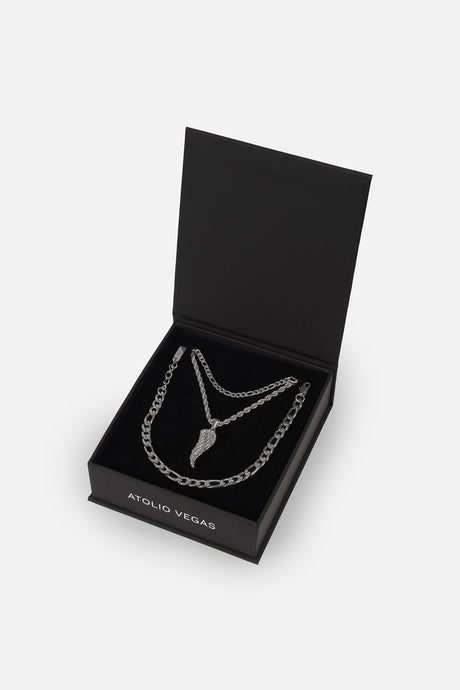
Das ergibt eine nutzbare Spanne von 40 cm bis 53 cm, ohne dass du etwas Ungewöhnliches kaufen musst. Eine feine Kette auf 40 cm und eine Panzerkette auf 51 cm liegen 11 cm auseinander, und das ist direkt aus der Box ein sauberer Zweierstapel.
Lass einen sichtbaren Abstand zwischen den Lagen
Wenn du beim Blick nach unten zwischen zwei Ketten weder Haut noch Hemd siehst, ist der Abstand zu klein.
In der Praxis heißt das mehrere Zentimeter Unterschied zwischen den Lagen, nicht einen. Sind beide Ketten verstellbar, stell die kürzere auf ihre kürzeste und die längere auf ihre längste Einstellung. Dann hast du aus dem, was du besitzt, das Meiste geholt, bevor du etwas ausgibst.
Ketten gleicher Länge lassen sich nie kombinieren. Sie liegen aufeinander, sie verheddern sich, und die Verschlüsse enden als Knoten im Nacken. Wenn du zwei in derselben Länge hast, trag eine.
Wie du Breiten kombinierst
Die breitere Kette kommt auf die längere Länge. Diese eine Regel deckt die meisten Paarungen ab.
Die Breite ist das, was einen Stapel davor bewahrt, wie ein Versehen auszusehen. Zwei Ketten gleicher Breite in verschiedenen Längen wirken wie ein Fehler. Unsere Ketten gibt es in 2 mm, 3 mm, 5 mm und 7 mm.
- 3 mm kurz mit 5 mm lang. Die verlässlichste Paarung, die es gibt, und die zum Anfangen.
- 2 mm kurz mit 3 mm lang. Beide fein. Aus der Entfernung ruhig, aus der Nähe detailliert.
- 3 mm kurz mit 7 mm lang. Ein starker Kontrast. Er funktioniert auf breiterer Statur und braucht einen offenen Kragen.
- 5 mm mit 7 mm. Schwer. Möglich, selten besser als jede einzeln.
Der Grund, warum die breitere Kette tiefer liegt, ist das Gewicht. Eine breite Kette hängt, eine feine Kette liegt auf. Legst du die feine darunter, wird sie den ganzen Tag aus ihrer Lage gedrückt.
Wie du Texturen und Metalltöne mischst
Misch Gliedformen frei, und bleib bei einem Metallton, wenn du keinen Grund hast, es nicht zu tun.
Eine flache Panzerkette neben einer gedrehten Kordelkette gibt dir zwei verschiedene Oberflächen, die Licht unterschiedlich fangen. Eine Schlangenkette, die fast glatt ist, neben einer Figarokette gibt Kontrast ohne Unruhe. Was nicht funktioniert, sind zwei Ketten mit ähnlichem Rhythmus in ähnlichen Breiten. Eine 3 mm Kordelkette und eine 3 mm Vipera in nahen Längen sehen aus wie eine Kette, bei der etwas schiefgegangen ist.
Gold und Stahl zu mischen funktioniert, aber es braucht ein drittes Element, das es zusammenhält, meist eine Uhr, die beide Töne trägt. Wenn du unsicher bist, bleib bei einem Ton und variiere stattdessen die Textur.
Trag einen Anhänger pro Stapel
Zwei Anhänger streiten um denselben Platz, schlagen aneinander und drehen sich weg.
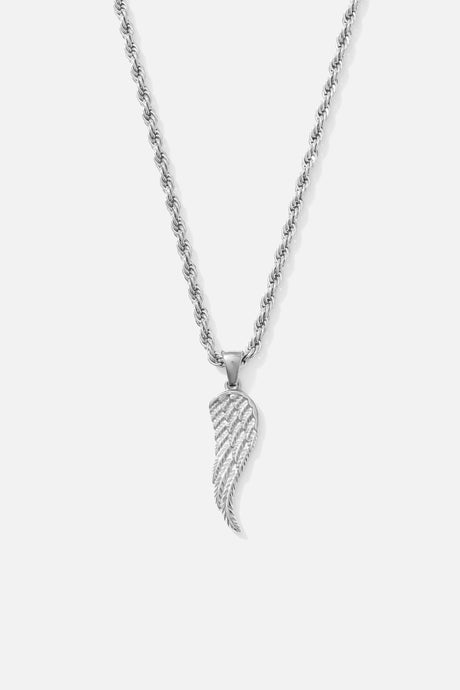
Häng den Anhänger an die längste Kette, damit er unter den anderen sitzt und Platz hat. Ein Anhänger an der kürzesten Kette liegt auf den Ketten darunter auf und liegt nie flach.
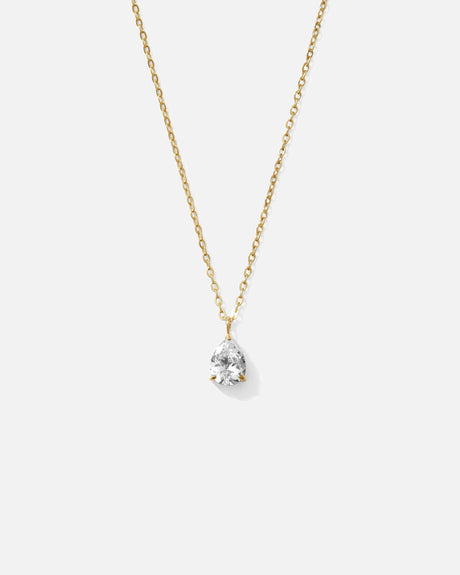
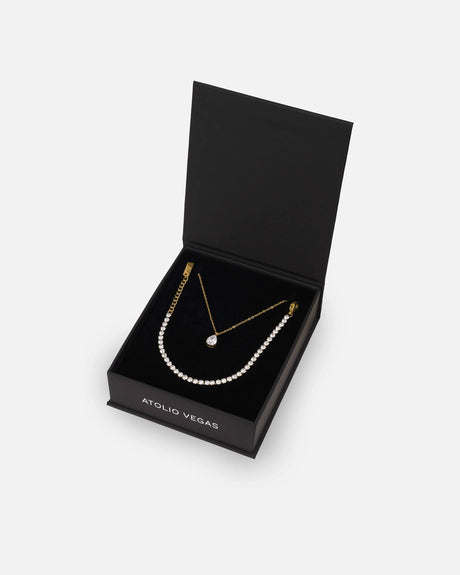
Anhängerketten in unserem Sortiment sind 49 cm mit 4 cm Verstellung, das setzt einen Anhänger auf oder knapp unter das Schlüsselbein. Eine davon mit einer feinen Kette auf 40 cm darüber ist der sauberste Zweierstapel, den wir machen.
Wie viele Lagen realistisch sind
Drei sind für den Alltag die ehrliche Grenze. Zwei sind einfach und wirken durchdacht. Drei funktionieren, wenn die Längen gut getrennt sind und die Breiten nach unten hin zunehmen.
Vier sind ein Projekt. Es braucht vier klar getrennte Längen, und es hört auf, etwas zu sein, das du ohne Nachdenken anlegst, und genau darum ging es. Jenseits von drei kommen sich die Ketten in die Quere, die Verschlüsse stapeln sich im Nacken, und du verbringst den Tag mit Justieren.
Wie du einen Stapel vor Knoten bewahrst
Die meisten Knoten entstehen in der Schublade, nicht am Hals.
- Nimm die Lagen einzeln ab und bewahre sie getrennt auf.
- Gib jeder Kette ihren eigenen Beutel. Stücke lose zusammen zu lagern ist auch die Quelle der Kratzer.
- Schließ vor dem Verstauen jeden Verschluss. Eine offene Kette findet eine andere Kette.
- Leg den Stapel nach Parfum und Aftershave an, nie davor. Das ist der schnellste Weg, eine Vergoldung zu ruinieren.
- Wisch jede Kette nach dem Tragen mit einem weichen trockenen Tuch ab, um den Schweiß zu entfernen, der eine Oberfläche über Monate stumpf macht.
Ein Stapel für den Anfang
Wenn du lieber eine Kombination willst als ein Regelwerk: eine 3 mm Panzerkette auf ihrer kürzesten Einstellung mit einer 5 mm Panzerkette auf ihrer längsten, oder eine feine Luna Emerald Kette auf 40 cm über einer North Kette auf 53 cm.
Alles davon ist aus 316L Edelstahl, die Goldversionen 18k vergoldet über demselben Stahl. Ein Stapel, der den ganzen Tag an sich selbst reibt, läuft also nicht an und färbt deine Haut nicht. Auf Schmuck gilt unsere lebenslange Garantie gegen Anlaufen, Verblassen und Bruch durch Unfall.
Das ganze Sortiment steht bei den Herrenketten und den Damenketten, und die FAQ-Seite hat die Details zu Lieferung, Rückgabe und Garantie.
