

Cómo superponer collares y cadenas
Deja un hueco claro entre cada longitud para que las cadenas no se apoyen unas sobre otras. Varía los anchos. Limítate a un colgante. Dos capas es seguro, tres es el límite. Nuestras cadenas son ajustables, y eso ya hace casi todo el trabajo.
Empieza por las longitudes que ya tienes
Superponer es una cuestión de longitudes antes que de estilos. Si dos cadenas quedan a menos de un centímetro una de otra, se enredan, rozan y se leen como una sola cadena gruesa y desordenada.
Las longitudes de nuestra gama se fijan por familia, y todas son ajustables.
| Familia | Longitud | Ajustable hasta | Queda |
|---|---|---|---|
| Cadenas finas, por ejemplo Luna Emerald y Vienna Clover | 40 cm | Más 9 cm, es decir, hasta 49 cm | En la base del cuello cuando va corta |
| Collares con colgante, por ejemplo North y Cannes | 49 cm | Más 4 cm, es decir, hasta 53 cm | A la altura de la clavícula o justo por debajo |
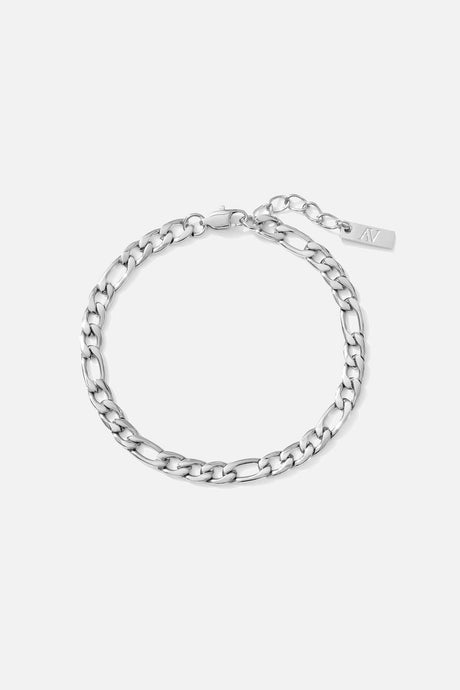
| Cadenas barbada, figaro, cordón, espiga, serpiente y Vipera | 48 cm | Más 3 cm, es decir, hasta 51 cm | A la altura de la clavícula |
Eso te da un recorrido útil de 40 cm a 53 cm sin comprar nada fuera de lo común. Una cadena fina llevada a 40 cm y una cadena barbada llevada a 51 cm están separadas 11 cm, que es una superposición de dos capas limpia nada más sacarlas de la caja.
Deja un hueco visible entre capas
Si al mirar hacia abajo no ves la piel o la camisa entre dos cadenas, el hueco es demasiado pequeño.
En la práctica eso significa una diferencia de varios centímetros entre capas, no de uno. Cuando las dos cadenas son ajustables, pon la corta en su posición más corta y la larga en la más larga, y habrás sacado todo el partido a lo que ya tienes antes de gastar nada.
Dos cadenas de la misma longitud nunca se superponen bien. Se apoyan una sobre otra, se enredan y los cierres acaban hechos un nudo en la nuca. Si tienes dos de la misma longitud, ponte una.
Cómo combinar los anchos
Pon la cadena más ancha en la longitud más larga. Esa única regla resuelve casi todas las combinaciones.
El ancho es lo que evita que un conjunto parezca un accidente. Dos cadenas del mismo ancho a distintas longitudes se leen como un error. Nuestras cadenas están disponibles en 2 mm, 3 mm, 5 mm y 7 mm.
- 3 mm corta con 5 mm larga. La combinación más fiable que existe, y por la que conviene empezar.
- 2 mm corta con 3 mm larga. Las dos finas. Discreta de lejos, con detalle de cerca.
- 3 mm corta con 7 mm larga. Un contraste fuerte. Funciona en complexiones anchas y pide un cuello abierto.
- 5 mm con 7 mm. Contundente. Es posible, pero rara vez mejora a cualquiera de las dos por separado.
La razón por la que la cadena más ancha va más abajo es el peso. Una cadena ancha cuelga, una fina se queda en su sitio. Pon la fina debajo y se te descoloca durante todo el día.
Cómo mezclar texturas y tonos de metal
Mezcla tipos de eslabón con libertad y quédate con un solo tono de metal salvo que tengas un motivo para no hacerlo.
Una barbada plana junto a un cordón retorcido te da dos superficies distintas recogiendo la luz de formas distintas. Una cadena serpiente, que es casi lisa, junto a una figaro da contraste sin ruido. Lo que no funciona son dos cadenas con un ritmo parecido y anchos parecidos. Un cordón de 3 mm y una Vipera de 3 mm a longitudes próximas parecen una sola cadena mal resuelta.
Mezclar oro y acero sí funciona, pero necesita un tercer elemento que lo sostenga, normalmente un reloj que comparta los dos tonos. Si tienes dudas, quédate con un tono y varía la textura.
Un solo colgante por conjunto
Dos colgantes se pelean por el mismo espacio, chocan entre sí y se dan la vuelta.
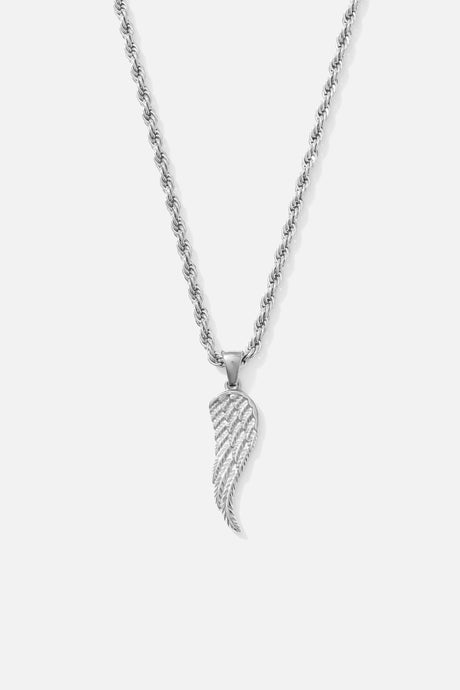
Cuelga el colgante de la cadena más larga, para que quede por debajo de las demás y tenga sitio. Un colgante en la cadena más corta se apoya sobre las cadenas de debajo y nunca queda plano.
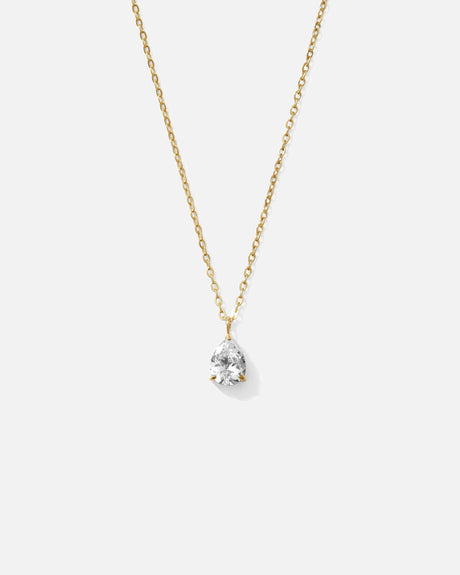
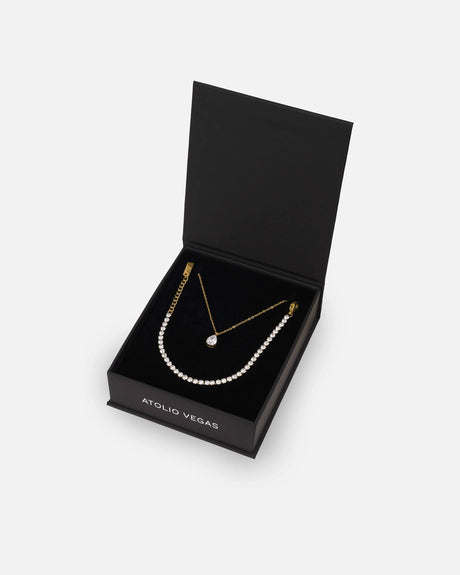
Los collares con colgante de nuestra gama miden 49 cm con 4 cm de ajuste, lo que sitúa el colgante a la altura de la clavícula o justo por debajo. Combinar uno de ellos con una cadena fina de 40 cm por encima es la superposición de dos piezas más limpia que hacemos.
Cuántas capas son realistas
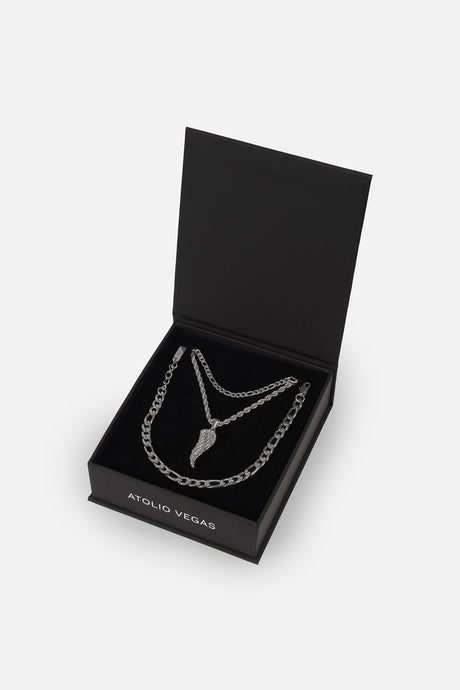
Tres es el límite honesto para el día a día. Dos es fácil y parece pensado. Tres funciona si las longitudes están bien separadas y los anchos van aumentando a medida que bajan.
Cuatro es un proyecto. Necesita cuatro longitudes distintas y deja de ser algo que te pones sin pensar, que era justo la gracia. Por encima de tres, las cadenas se estorban entre sí, los cierres se amontonan en la nuca y te pasas el día recolocándolas.
Cómo evitar que un conjunto se enrede
La mayoría de los enredos se hacen en un cajón, no en el cuello.
- Quítate las capas de una en una y guárdalas por separado.
- Dale a cada cadena su propia funda. Guardar las piezas sueltas y juntas es también de donde vienen los arañazos.
- Cierra todos los cierres antes de guardarlas. Una cadena abierta encuentra otra cadena.
- Ponte el conjunto después del perfume y el aftershave, nunca antes. Es la forma más rápida de estropear un acabado chapado.
- Pasa un paño suave y seco por cada cadena después de llevarlas, para retirar el sudor que apaga la superficie a lo largo de los meses.
Un conjunto para empezar
Si prefieres una combinación concreta en lugar de un conjunto de reglas: una cadena barbada de 3 mm en su posición más corta con una cadena barbada de 5 mm en la más larga, o una cadena Luna Emerald fina a 40 cm sobre un collar North a 53 cm.
Todo es acero inoxidable 316L, y las versiones en oro llevan un baño de oro de 18 quilates sobre ese mismo acero, así que un conjunto que se roza consigo mismo todo el día no se oscurece ni te mancha la piel. La joyería tiene nuestra garantía de por vida frente al oscurecimiento, la pérdida de color y la rotura accidental.
La gama completa está en collares de hombre y collares de mujer, y la página de preguntas frecuentes tiene el detalle de entrega, devoluciones y garantía.
